Saturday, September 11, 2010

Tulu Script and Thawlava Software

You can read this post in Kannada here.

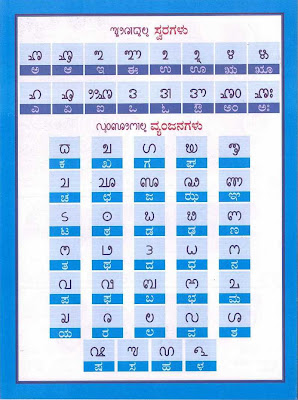
Not many people know that Tulu language has its own script. Bhagavato is the first Tulu epic to have been written in Tulu Script. In this epic, Poet Vishnutunga quotes Kannada poets Kumaravyaasa and Chaatu Vithalanaatha. Bhagavato dates back to 1636 A.D. This epic has been preserved in Manuscripts Department of Mangalore University with the efforts of Dr Venkataraja Puninchattaya(Info: Baravuda Jeetige - by Suryoday Perampalli).Baravuda Jeetige Tulu Alphabet Book CoverKannada actor Suryoday Perampalli has brought out a book of Tulu alphabets. You can see the Tulu alphabets from one of the pages of the book below. Tulu alphabetsOn the other hand, National Computer Literacy Committee has come up with Tulu transliteration software - Thwalava 2.0. Key board layout used is the same as the one used for Kannada transliteration software - Nudi. There are 50 alphabets in Tulu language. Demo of the software was done in last year's World Tulu Convention. You can also see the usage of the software in the video below.
Related Links:
Times Of India's report on Thawlava Software
Deccan Herald's report on Thawalava Software

Sunday, June 06, 2010

Learn Tulu Kannada Online : Part 5 - Sentence Formation in Tulu and Kannada

I am overwhelmed by the positive responses from the readers for Learn Tulu Online Series. Knowing few phrases may be a good starting point to learn a new language. But if not taught formal structure/grammar of the language, one will not go beyond those few phrases. As some of you have suggested earlier, in this post there is an attempt to teach the language formally.Do listen to the audio guide below to pick up the pronunciation
Sentence formation in Tulu :
Pronouns:
English: I, You, He, She, We, They, This, That
Tulu : yaan, ee, aaye, aal, nama, akl, undu, avu
Kannada : naanu, neenu, avanu, avaLu, naavu, avaru, idu, adu

Apart from the pronouns listed above, one important and common pronoun to use in any Indian languge is the plural form of 'you', to address the person you are talking to.
In Tulu, you use eer.
In Kannada, you can use neevu or taavu.

Verbs:
Some of the common verbs used in day-to-day life
English: go, come, sit, laugh, stop, call, tell, do, write, read
Tulu: pola, bala, kullu, telipu, unt, leppu, pan, manpu, barela, odla
Kannada: hogu, baa, koothko, nagu, nillu, kare, heLu, maaDu, bare, odu

Some more verbs
English: give, take, eat, drink, run, get up, dance, watch/look, wait, talk
Tulu: koru, detonu, tin, par, balipu, lakk, nalipu, toola, kaapu, paater
Kannada: kodu, tegeduko, tinnu, kuDi, oDu, ELu, kuNi, noDu, kaayi, maatanaaDu

Listed above are the singular forms these verbs. It is important to use the plural form of these verbs as otherwise it might be perceived as disrespect while talking to elders or the people you meet for the first time. So, here are the list of plural forms of the above verbs in their respective order. Also, it should be noted that these verb forms are the ones used, when you directly talk to the person and not in 3rd person narration.
Tulu: pole, bale, kullule, telipule, untle, leppule, panle, manpule, barele, odle
Kannada: hogi, banni, koothkoLLi, nagi, nilli, kareyiri, heLi, maaDi, bareyiri, odi

Tulu: korule, detonule, tinle, parle, balipule, lakkle, nalipule, toole, kaapule, paaterle
Kannada: kodi, tegedukoLLi, tinni, kuDiyiri, oDi, ELi, kuNiyiri, noDi, kaayiri, maatanaaDi

By now, you would have realized that in Tulu for the verbs, if you add 'le' at the end you would get the plural form of the same(atleast it is true for the verbs listed here). In Kannada, though the suffix may be different for the words ending in different letters, 'i' at the end is common.

Objects:
English: lunch/dinner, water, tea, home, work, place
Tulu: vaNas, neer, chaaya, ill, bEle, oor
Kannada: ooTa, neeru, chahaa, mane, kelasa, ooru

Simple Sentence Formation : As it is always better to start off with plural form of verbs while learning any Indian language, I have used the same below. For singular forms refer the list above.

English : You take this route.
Tulu : eer ee route detonle.
Kannada : neevu ee route thegedukoLLi.
(though 'this' is 'undu' in Tulu, in this context for 'this route', 'ee route' is more appropriate. Same in the case of Kannada. Also, usually in Indian languages verbs come last unlike in English, where it comes in the middle of the sentence)

English : You run in the marathon.
Tulu : eer marathan d balipule.
Kannada : neevu marathonnalli ODi.

English : You sit in this chair.
Tulu : eer ee chair d kullule.
Kannada : neevu ee chairnalli koothkoLLi.

I hope you will be able to form more sentence following the examples above. If you require more verbs/sentences/objects please leave a comment in this post. In the next post, more complex sentences to follow.

Happy Learning
Raveesh

Saturday, May 08, 2010

Prithvi(Kannada) Movie Review

That Prithvi is a film, based on the current political scenario in Karnataka(involving mining lords) is now well known. But how well it has managed to keep this theme throughout the film without being too filmy, is the question to be asked. According to me, Prithvi manages to be out of the ordinary. But then it is far from being a cult movie.

Prithvi(Puneeth Rajkumar) faces political pressures, right from the first day of being appointed as the Deputy Commissioner(DC) of Bellary. But he refuses to yield to politicians/mining lobby's demands. First half of the movie depicts the working of DC offices pretty well. Full marks to Jacob Varghese for that. Puneeth Rajkumar and Parvati Menon in Prithvi Kannada Film
Picture Courtesy : nowrunning.com
But taking up a realistic subject and being commercial in movie making is a tough balancing act. That's what you feel when you see 5 duets being stuffed in the movie. Well, songs could have been reduced to 2 or 3. Then you have female lead, Parvati Menon limited to dancing in those 5 songs. Also, less scope for veteran actor, Avinash in a villainous role. Though the film's first half is a subject of recent times, the climax in the second half is a cliche. It seems like a repeat of those from action films of the 80s and 90s. Film fails miserably here because sequences being too melodramatic.

Barring the cliches in the film, dialogues are the highlight. Dialogues taking a dig at celebrity worshipping in India and on the current political setup invokes laughter. Also there are dialogues relating to one's ideals and being practical. One ridiculous thing in the film is the disclaimer shown at the beginning, that the film being not related any real incidents/persons. But after hearing few sarcastic dialogues, anyone can make out that Karnataka politicians and Kannada media is at the receiving end. If not, do you think former prime minister Mr.H D Deve Gowda would have watched the film, taking time out of his 'busy' schedule?

Sunday, April 25, 2010

City Centre Mall, Mangalore - Inauguration Today

2nd Biggest mall among the ones in Tier II cities in India, City Centre Mall, Mangalore will be officially inaugurated today, 25th April, 2010. With this Mangaloreans will have one more place to hang out and shop. Few days back, Life style outlet was opened in this mall. Various events were held in the mall running upto the inaugural day. I had visited the place last Monday. Here some of the pictures of the new mall.City Centre Mall, K S Rao Road, Mangalore
City Centre Mall, Mangalore
Rock Show at City Centre Mall, Mangalore
K S Rao Road, Mangalore

Saturday, April 24, 2010

Puttur Shree Mahalingeshwara Temple Chariot Festival

Chariot Festival of Mahotobhaara Shree Mahalingeshwara Temple, Puttur was held on April 17, 2010. 71 feet high Brahma Ratha or Chariot was the highlight this time. Though it rained heavily for about an hour during the night of Chariot festival and created a mess for the people gathered, once it stopped raining people gathered again with the same enthusiasm at the festival grounds. Before Chariot festival begins, there is cracker festival held, witnessed and applauded by thousands gathered. Sky filled with colors during this time, is a treat to watch. But this time, due to rains cracker festival began at about 11 pm. So I could not see the whole of the festival. Here are some of the photos from the festival.
Brahma Ratha of Puttur Sri Mahalingeshwara Temple

Wood carvings on Brahma Ratha

Temple Pond of Puttur Mahalingeshwara Temple

Full view of Puttur Mahalingeshwara Temple

Brahma Ratha decorated with electric bulbs

Bird's View of Puttur Mahalingeshwara Temple

Betaala puppet
Betaala puppet

Entertainment stalls at Festival

Thursday, April 01, 2010

Trip to Horanadu, Kalasa, Hosanadu Temples

Continuing from previous post...

To reach Horanadu from Sringeri you need to go via Kudremukha. If you love driving, then you would definitely want the roads to be as good as in Kudremukha. Great roads amidst greenary makes the drive memorable. Soon after Kudremukha, you will be greeted by tea estates on your way to Kalasa. Horanadu is half an hour journey from Kalasa. We had planned first to go to Horanadu then visit Kalasa temple, on our way back to Mangalore.Horanadu Annapoorneshwari Temple
Horanadu Annapoorneshwari Temple
As it was a holiday season, the temple was full of devotess from all over Karnataka. We went in queue for darshanam of Goddess Annapoorneshwari. Temple surroundings are filled with greenary. Coconut and arecanut palms form the backdrop of the temple. After the darshanam, we had the food in Bhojana Shaala of the temple. After this, when we started towards Kalasa, it was 3 15 in the afternoon.
Kalaseshwara Temple, Kalasa
When we reached Kalasa, it was 3 45 pm. Kalasa is located in Mudigere Taluk of Chikmagalur district and is the abode of Lord Kalaseshwara. This place is also known as Dakshin Kashi. Using the stairs, if you go towards the temple, first you will find storeyed building, much similar to the houses in Malnad. After moving to the right of this building, you will find Kalaseshwara Temple. Usually, people who visit Malnad, visit Sringeri, Horanadu and Kalasa temples in a single day. So, we could identify the faces, we saw in Sringeri and Horanadu.Rainbow in Kudremukha
Rainbow in Kudremukha
After the darshanam of Lord Kalaseshwara, when we started towards Mangalore, it was 4 30 pm. On our way back, in Kudremukha, we could spot a rainbow. Perfect picture in a perfect place. My plan when coming back was to go to Hanumana Gundi falls(Soothanabbi falls), which is 22 meters in height and is in Kudremukha National Park. But when we reached the place, it was closed as the entry timings are from morning 9 to evening 4 30 and it was already 6.Great Roads in Kudremukha
Kudremukha Roads - Too Good
These days, Kodyadka or Hosanadu (which is 7 km from Alangar in Dakshina Kannada in Moodabidare - Karkala highway) is becoming famous for Hosanadu Annapoorneshwari Temple. We decided to visit the shrine. Hosanadu temple was built by a localite when he got inspired, after frequent visits to Horanadu, to build a similar temple in his native.Radha Krishna Statue in Hosanadu, Kodyadka
Sculptures of Radha and Krishna in Hosanadu Temple, Kodyadka
At the temple entrance, you will see, 63 feet Lord Hanuman statue, holding the mountain containing Sanjeevini herbs. When you move further towards the temple, you will find a beautiful garden. Garbhagudi of the temple is a replica of Horanadu temple. Devotees are offered meals after the night pooja. One more thing worth mentioning here is that, priests do not accept any dakshina(money offerings) from devotees.

When we reached Mangalore, after visiting Hosanadu - that ended our 2 day pilgrimage trip to temples in coastal and Malnad Karnataka.

Raveesh

LinkWithin

Related Posts with Thumbnails